


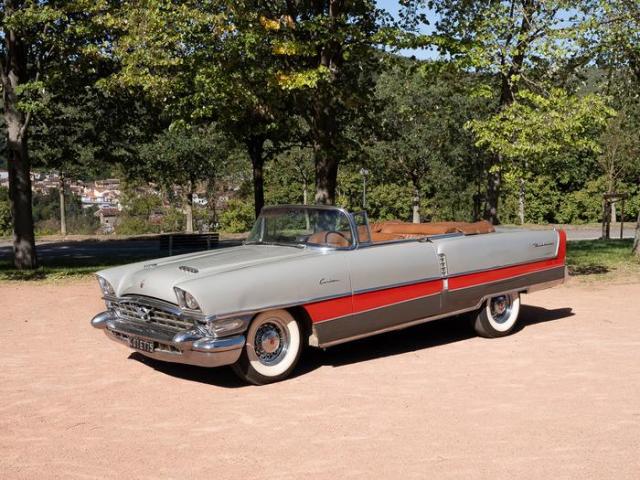
An American brand founded in 1899 by two brothers; from 1925 onwards, it specialised in state-of-the-art luxury models, offering 12-cylinder cars.
Packard produced V12 engines for Liberty aircraft from 1914 onwards and, during the Second World War, became a major supplier of engines to the air force and navy.
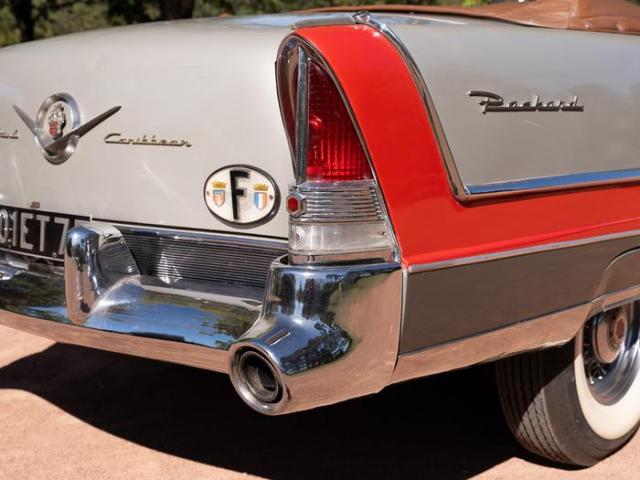
The ‘Caribbean’ was the last model produced by the brand and also the most powerful, in a bid to avoid bankruptcy. It was presented as the ‘best’ the brand had ever produced, but this no longer appealed to the post-war American public. Packard merged with Studebaker in 1958.
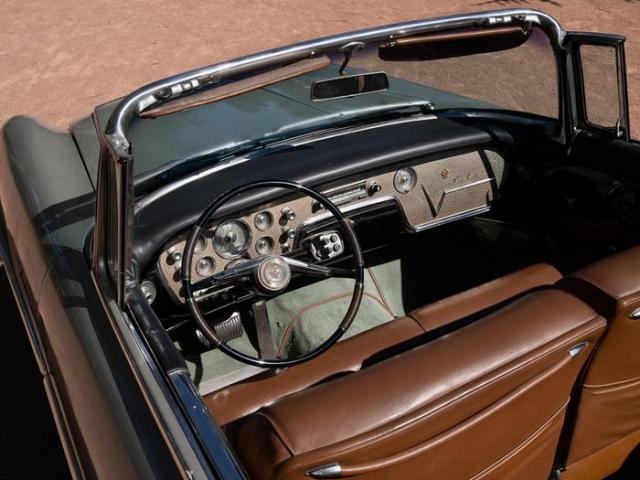
The bodywork paintwork and upholstery are not original. The ‘Caribbean’ engine has been replaced by a ‘Patrician’ engine (with a single carburettor and around 15 horsepower less than the original engine). This engine was the most powerful mass-produced engine of its time.
A total of 276 convertibles of this model were produced (the museum’s example is the 228th).
– V8 side-valve engine, 6,132 cm³,
– 2 four-barrel carburettors, 4,600 rpm
– ‘Ultramatic’ 3-speed automatic gearbox with ‘electronic’ selection
– Torsion bar suspension with electric levelling system
– Drum brakes
– Front heating, power steering
– Weight: 2,170 kg
– Approx. 160 km/h
– Numerous electric controls: soft top, windows, seats, radio aerials (not fitted to this model)
– Dimensions: 5.5 m x 1.98 m