



-
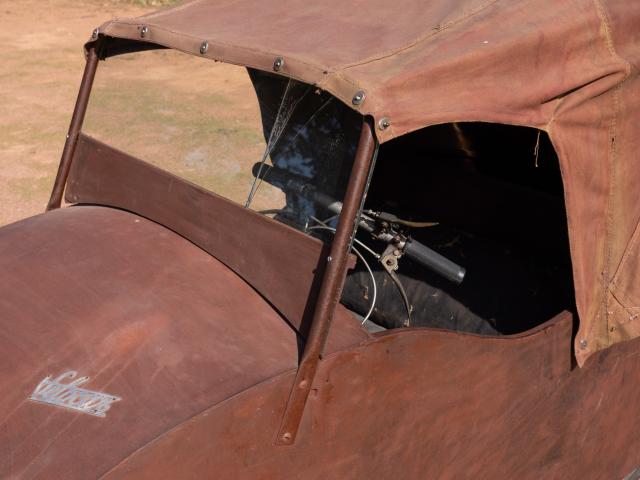
Quadricycle Velocar MOCHET - detail volant -
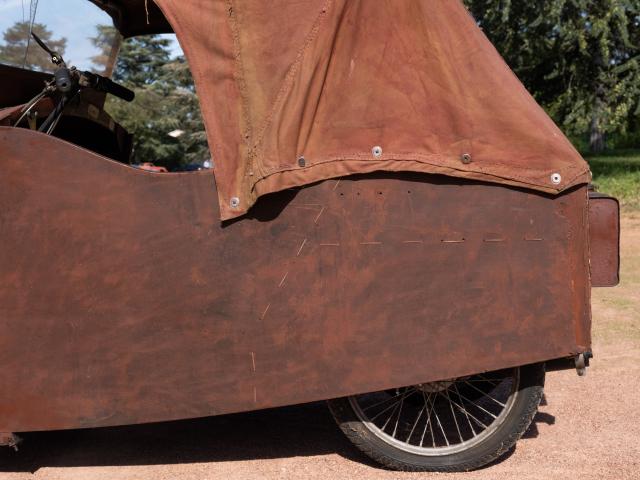
Quadricycle Velocar MOCHET - detail capote -
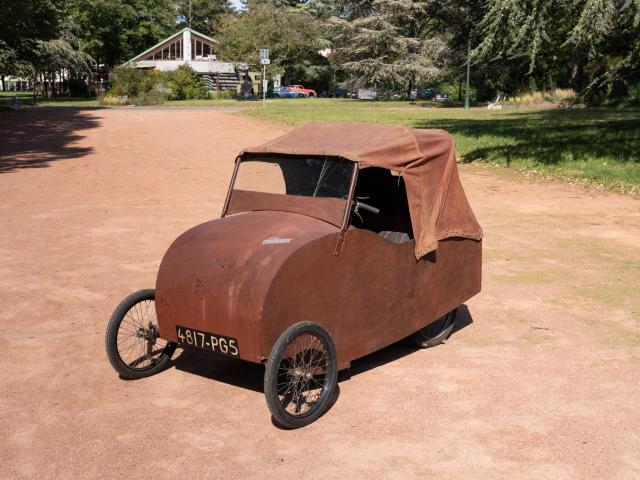
Quadricycle Velocar MOCHET - face -
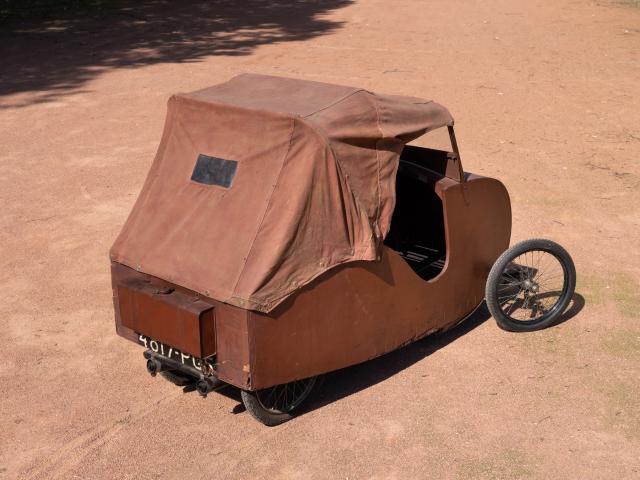
Quadricycle Velocar MOCHET - arrière -
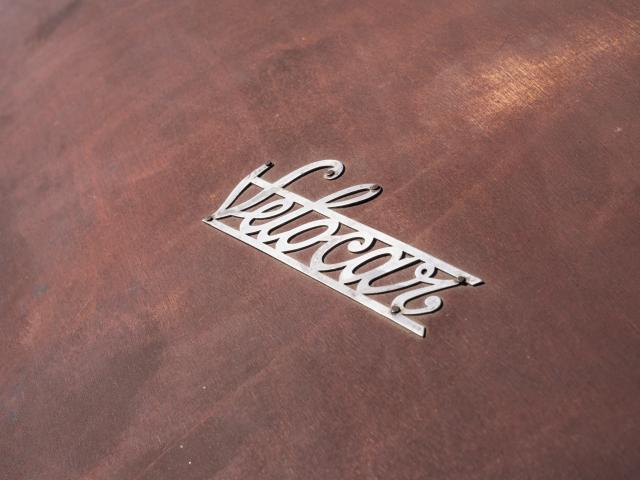
Quadricycle Velocar MOCHET - detail marque
The Mochet Vélocar is a pedal-powered four-wheeled vehicle designed by Charles Mochet in Puteaux, France, in the early 1920s.
The idea dates back to the beginning of the 1920s: his son Georges, who was about nine years old at the time, wanted a bicycle, but his parents were worried about accidents. Charles Mochet therefore built him a small four-wheeled, streamlined vehicle powered by pedals.
It was marketed from the mid-1920s as an economical alternative to the automobile.
Lightweight and equipped with four wheels, it had a wooden body and could generally accommodate two people.
It was powered by a pedal-and-chain system with several gears.
Its semi-reclined driving position provided good comfort and excellent aerodynamics for the time.
The Vélocar became particularly successful during the Second World War due to fuel shortages.
Mochet later developed the Vélo-Vélocar, an ancestor of the modern recumbent bicycle, which set several cycling records.
After the war, the company turned to small motorized vehicles before ceasing operations in 1958.
- Bodywork: lightweight, mainly made of wood/plywood
- Transmission: chain drive, with several gears
- Weight: around 80 kg for some models
- Key feature: semi-reclined and aerodynamic driving position