


-
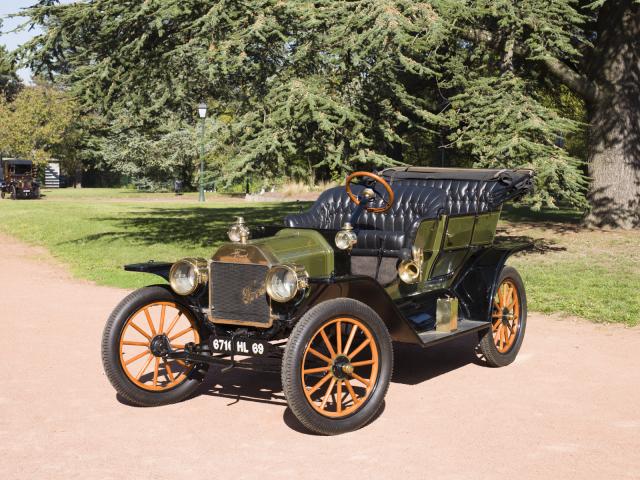
Automobile FORD T Double phaéton - Vue 3/4 avant profil gauche -
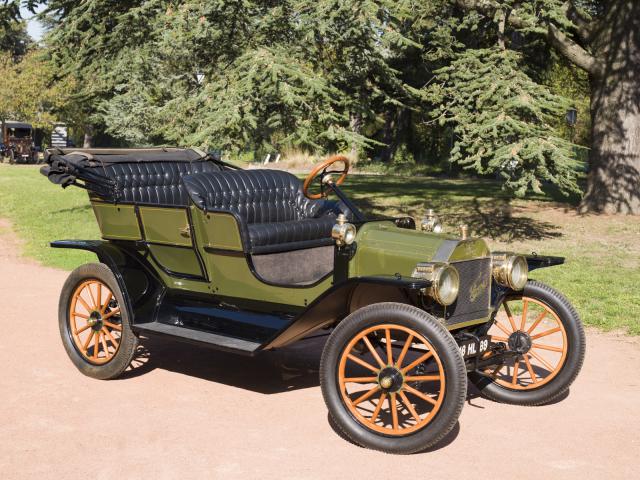
Automobile FORD T Double phaéton - Vue 3/4 avant profil droit -
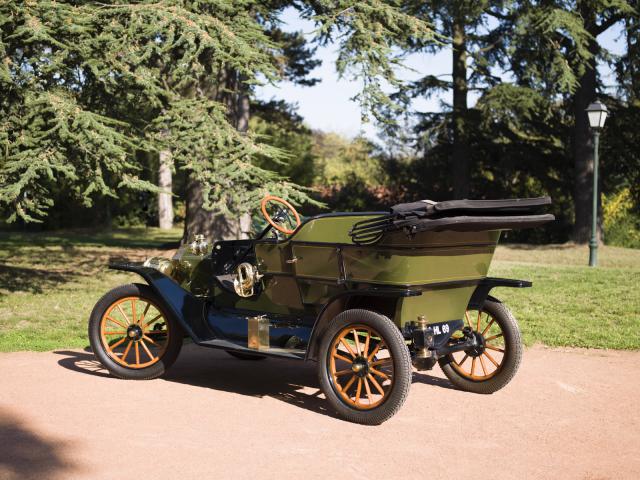
Automobile FORD T Double phaéton - Vue 3/4 arrière profil gauche -
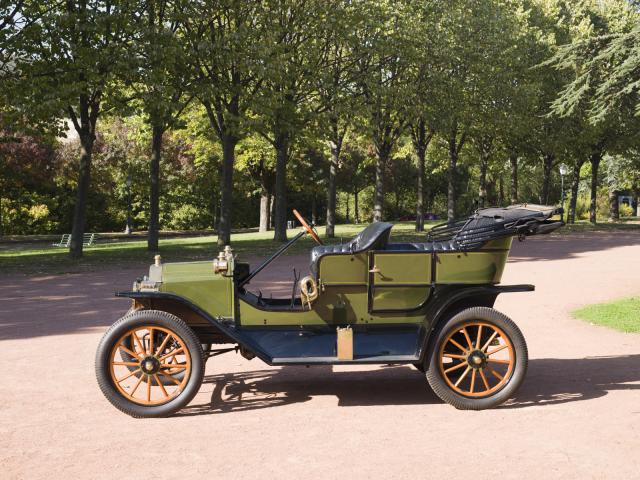
Automobile FORD T Double phaéton - Profil gauche -
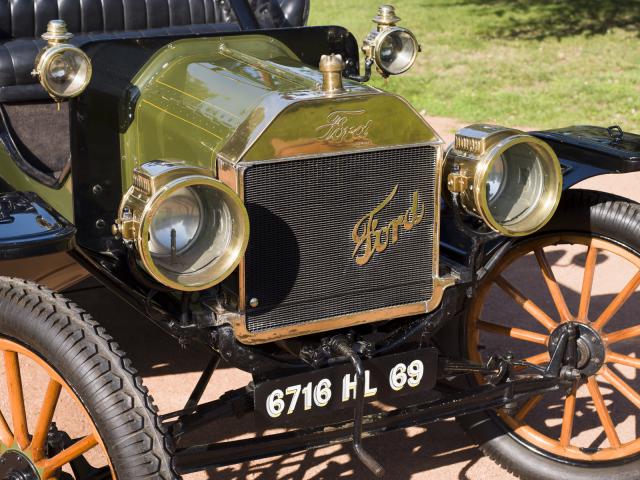
Automobile FORD T Double phaéton - Détail avant -
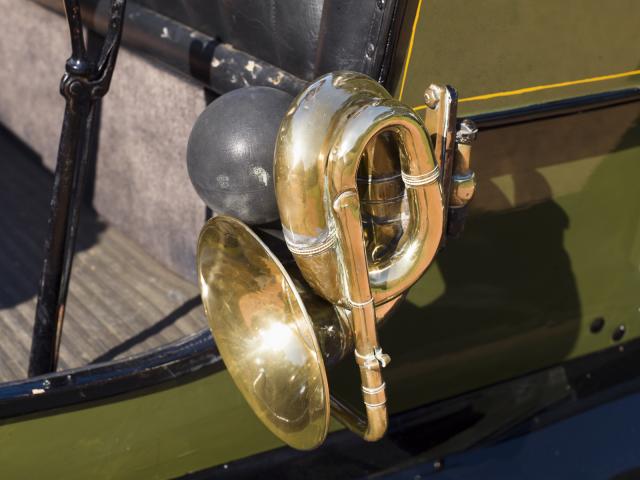
Automobile FORD T Double phaéton - Détail klaxon -
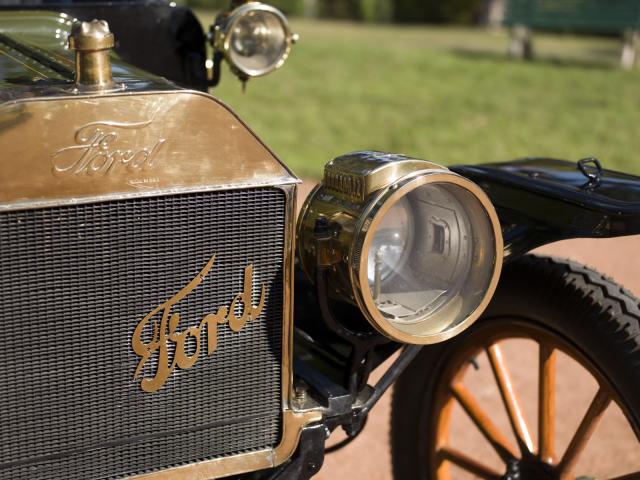
Automobile FORD T Double phaéton - Détail avant
This automobile symbolizes the democratization of the automobile and the era of mass production and industrial assembly lines. This open tourer model is a luxury version with its double phaeton body.
The Model T was produced by Ford from 1909 to 1927, with 16 million units manufactured.
It was the first car produced “on an assembly line” according to the principles of Taylorism (specialization and time-studying of tasks), of which Henry Ford was a proponent. This made it possible to lower the retail price as production rates increased: the two-seater version dropped from $825 (a schoolteacher’s annual salary) in 1910 to $260 in 1925.
To further reduce costs, all cars produced between 1914 and 1925 were available only in black.
- Inline 4-cylinder engine with side valves - 2892 cm3 - 14 hp
- Dual ignition system using magneto or magnetic flywheel.
- Rear-wheel drive, 2-speed semi-automatic transmission + reverse gear controlled by pedals.
- Rigid front and rear axles suspended by transverse leaf springs.
- Foot brakes on the transmission, hand brakes on the rear wheels.
- No brakes on the front wheels.
- Top speed: 48 mph
- Throttle lever on the steering wheel