


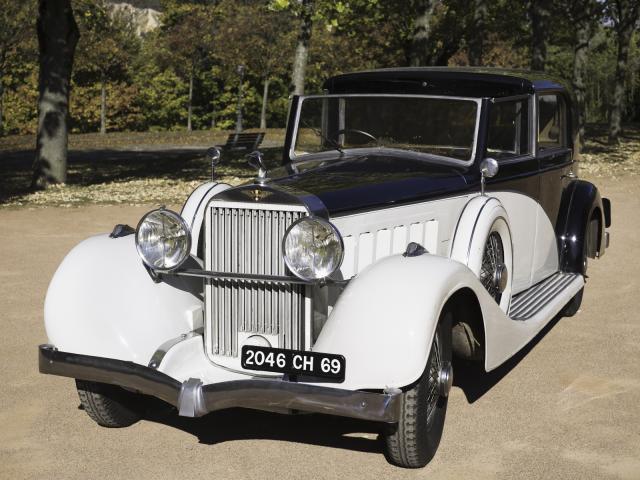
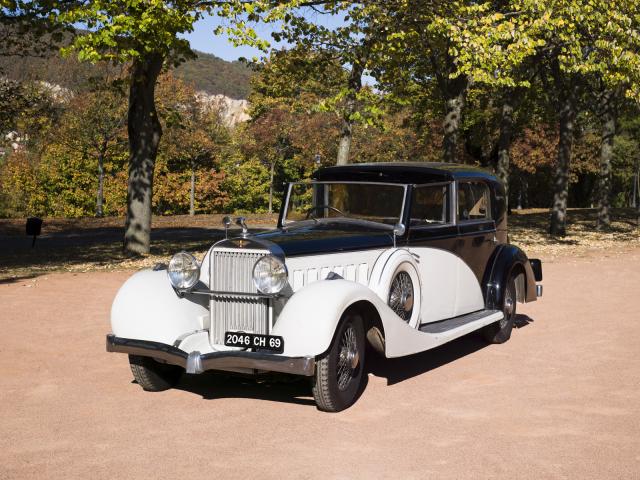
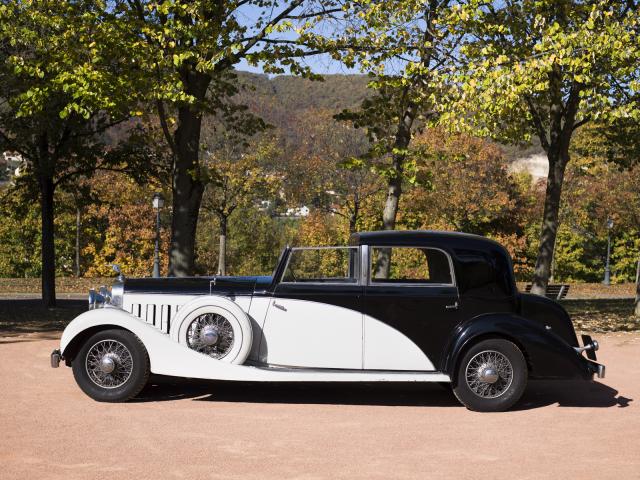
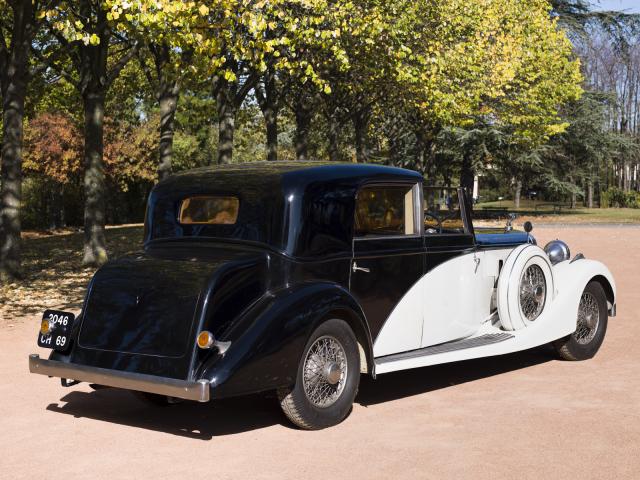
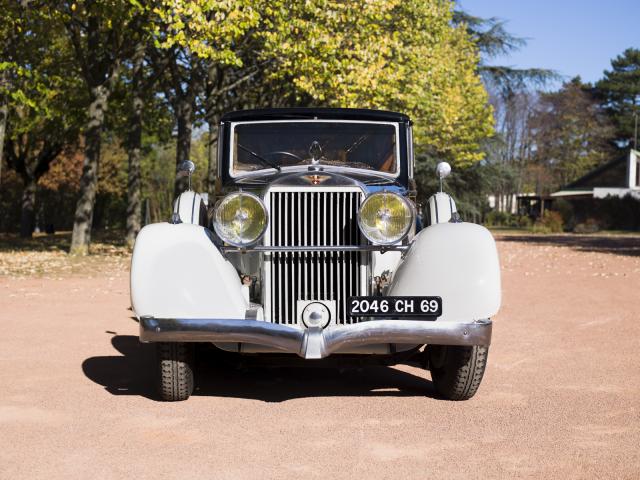

It has always been common practice for chassis (particularly the high-end ones) delivered by manufacturers to be custom-bodied, according to the wishes (and means) of their owners, by independent coachbuilders. Although series production of ready-to-drive cars gradually became widespread, it was during the 1930s that prestigious French coachbuilding reached its peak. This Hispano-Suiza K6, bodied as a coupé-chauffeur (or town coupé) by Franay (Paris) and built in France at Bois-Colombes, was presented on the brand's stand at the Paris Motor Show in October 1936. The K6 chassis, introduced in 1935, was derived from those of the top-of-the-range H6 and J12 models. It was produced in 204 examples until 1938.
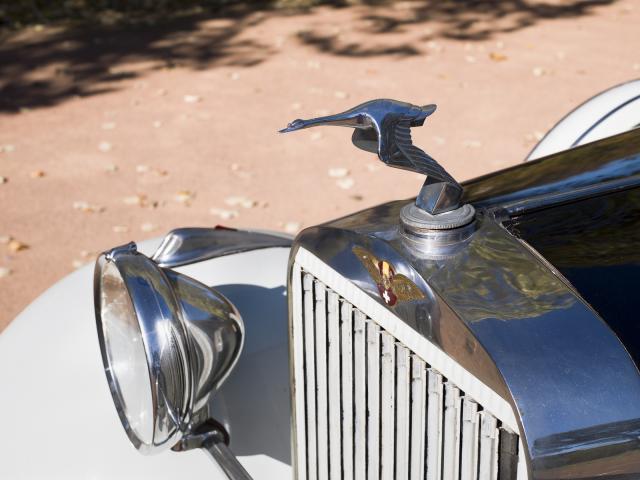
Hispano-Suiza is a Spanish manufacturer founded in 1904 by Swiss engineer Marc Birkigt. The brand is famous for its luxury cars built in the French factories at Bois-Colombes. The company also built renowned aircraft engines; indeed, they powered the SPAD fighters during the 1914-1918 war. From 1919 onward, the radiator mascot of its cars depicted a stork, the emblem of the squadron of France's ace of aces: Georges Guynemer.
- Bodywork: Coupé de ville (town coupé) by FRANAY
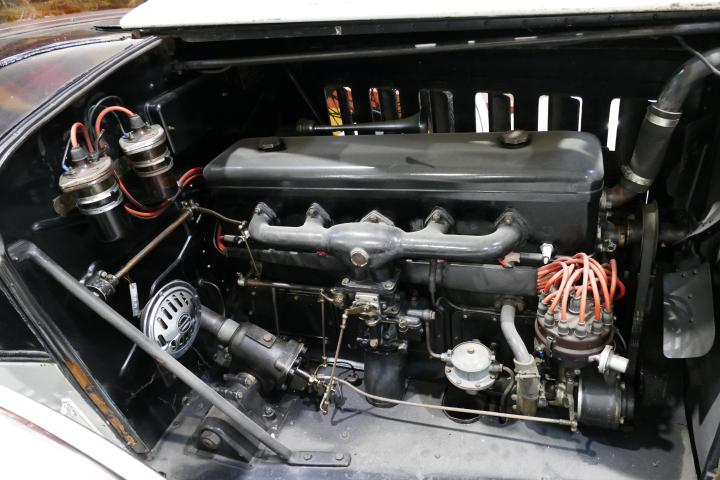
- Engine: 32 hp (CV) 6-cylinder in-line with overhead valves and dual ignition, 5,180 cm³, 120 hp at 3,200 rpm
- Transmission: Rear-wheel drive, 3-speed manual gearbox plus reverse
- Suspension: Rigid (live) axles
- Brakes: Drum brakes, mechanically operated by rods, assisted by a mechanical servo-brake
- Chassis: 2 models with either standard or long wheelbase (as on this car), depending on the desired body type
- Weight: Approximately 2,000 kg depending on the bodywork
- Top speed: Approximately 90 mph